I like maps, the ones that reimagine and rewrite the world. A new map is always a reinvention of what we thought we knew, of the world as we first learned it. A map can open and dissolve borders, bringing us back to an original sense of place. And an old map is also a new one when we remember what happened there, when we recreate the violence and fire that originated it.
Chicana artist Sandy Rodriguez works with this idea: her maps don’t simply chart territories—they tell stories, expose violence, and imagine possible futures. Her lines and textures recall the 16th-century codices created during the cultural collisions of the Americas, reminding us that a map is always more than geography—it is memory, power, and resistance. To these maps she adds the representation of bodies, their silhouettes forming borders between the inner and the outer, and landscapes textured like the way they live on in memory.
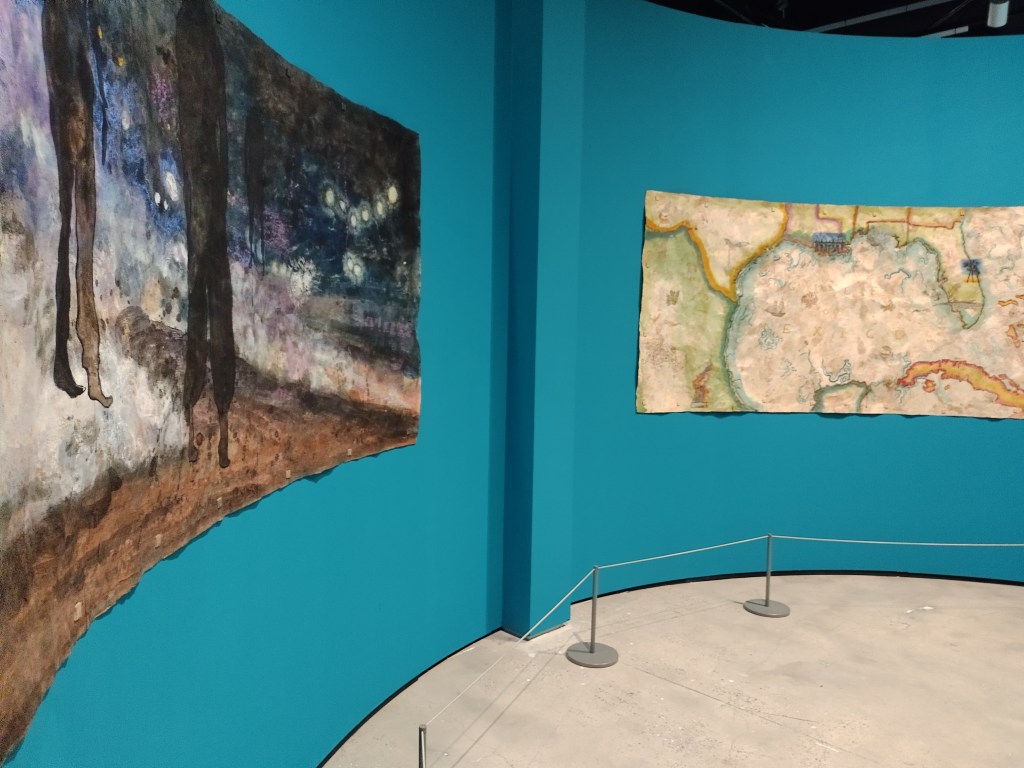
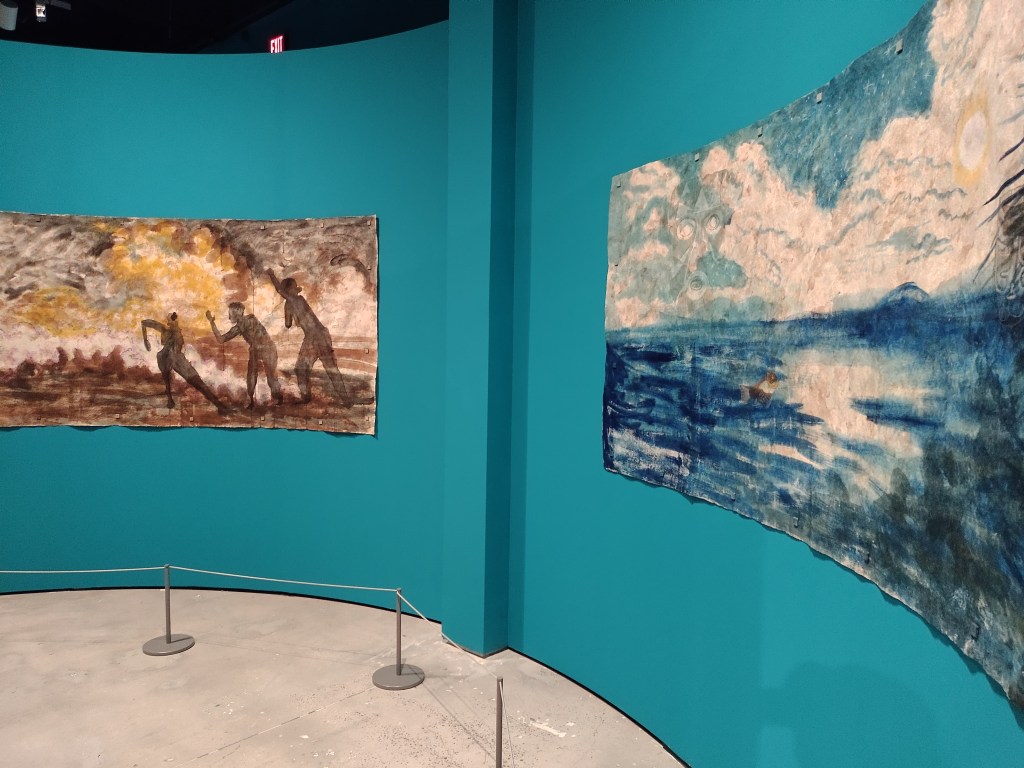
In her exhibition Currents of Resistance, presented at the Ringling Museum after two years of development between Florida and California, Rodriguez creates a multimedia installation with video, audio, a large paper panorama, and a “cabinet of curiosities.” The work links cultural resistance with environmental harm and connects Indigenous memory to changes in the Gulf region.
Standing before these pieces, I thought a lot about the geographic, spiritual and political space we occupy, a theme I also explore in my books such as Finisterre, where real and fake maps twist the meaning of the world.

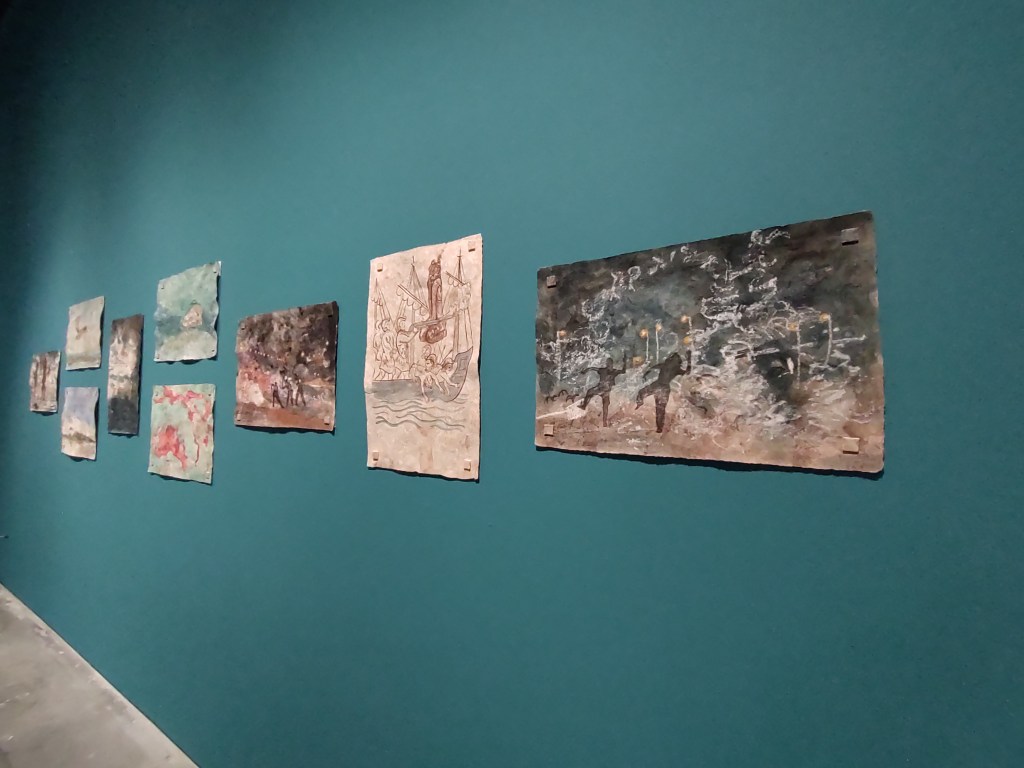
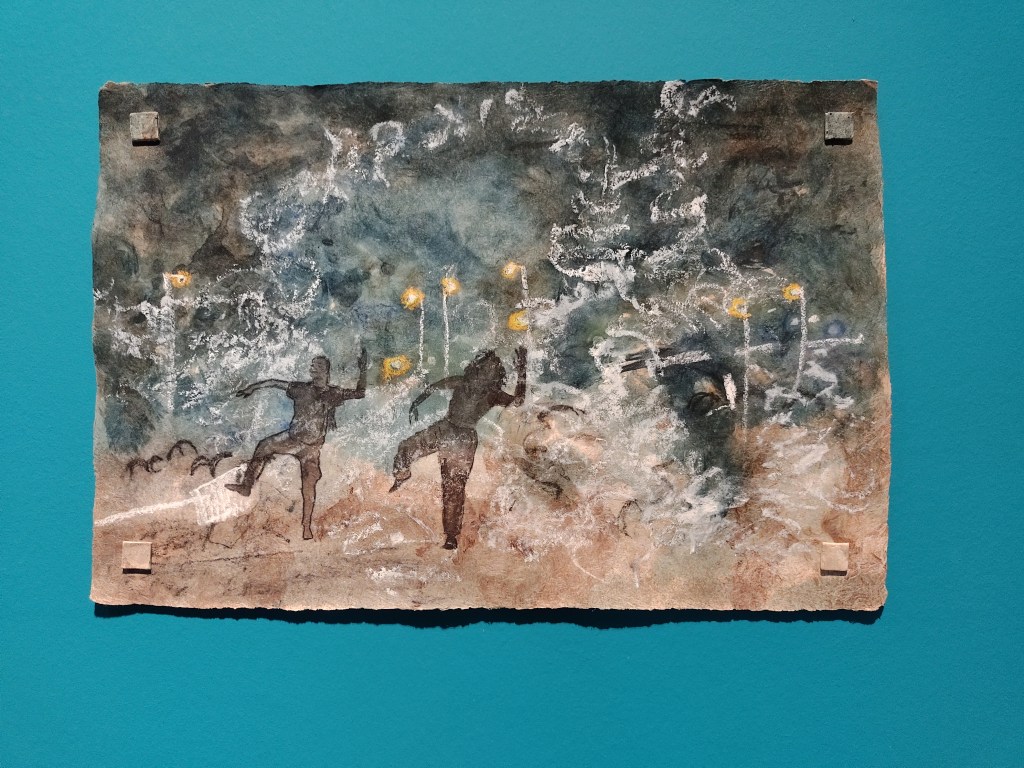
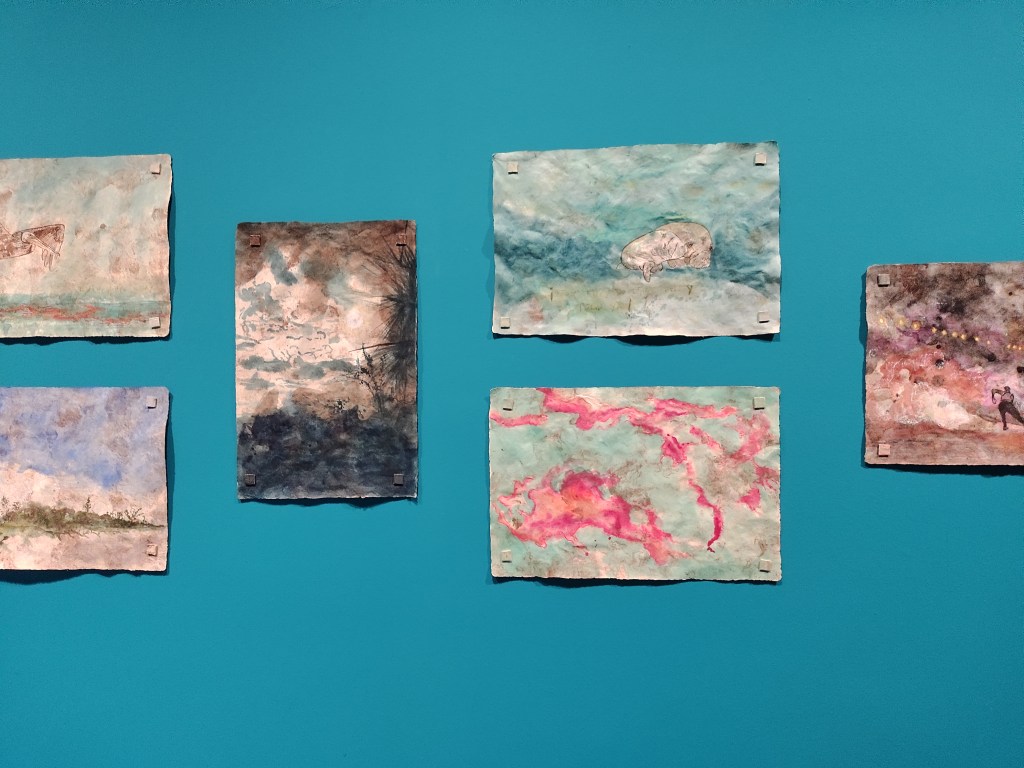
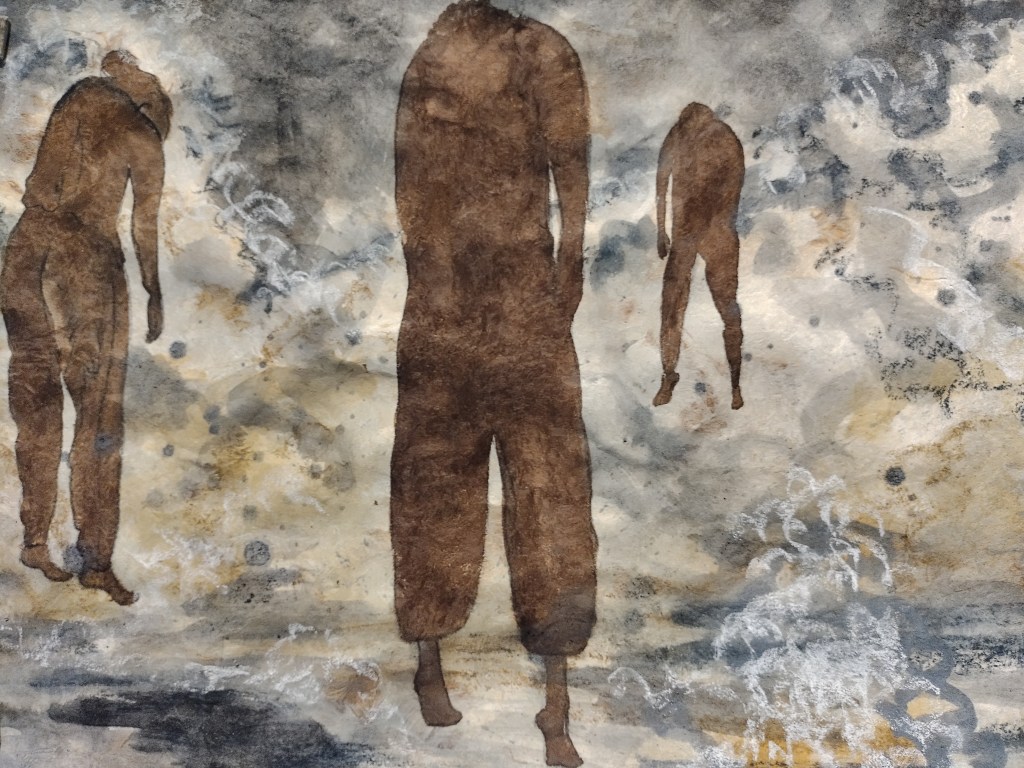
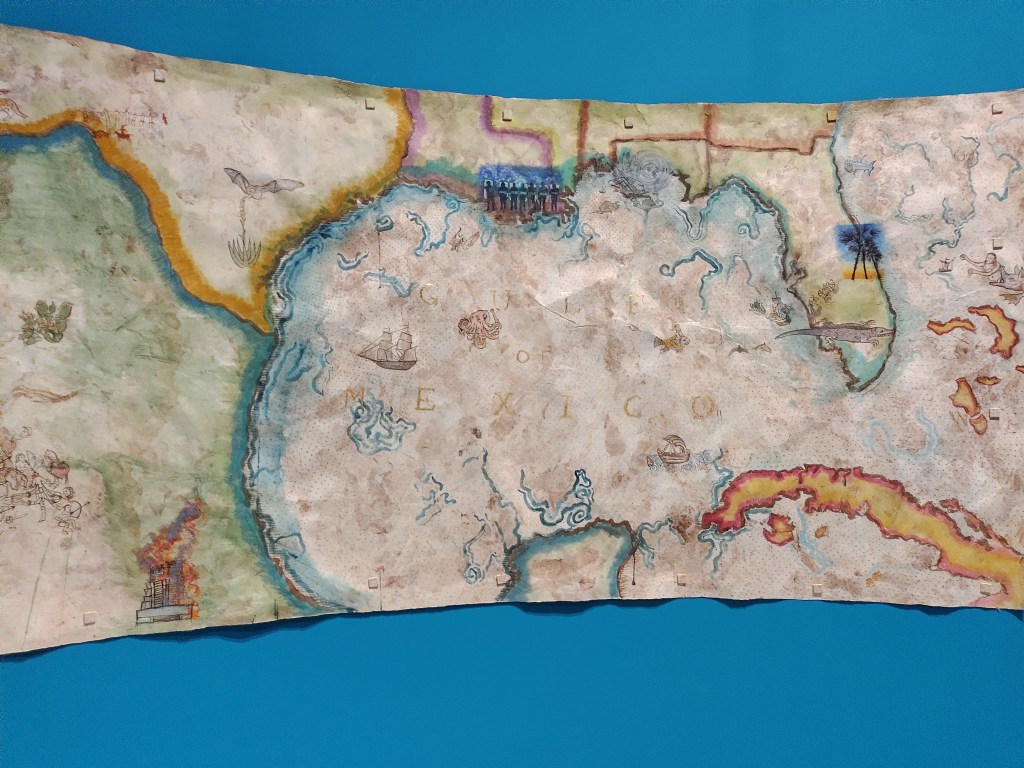
All the photos in this post were taken at the Ringling Museum and show the work of Sandy Rodriguez. You can explore more of Sandy Rodriguez’s work on her website: www.studiosandyrodriguez.com
 the present tense
Leave a comment