When approaching Nathan Park from the south along Cattleman Road, there’s a wall that separates this avenue from the I-75 freeway.
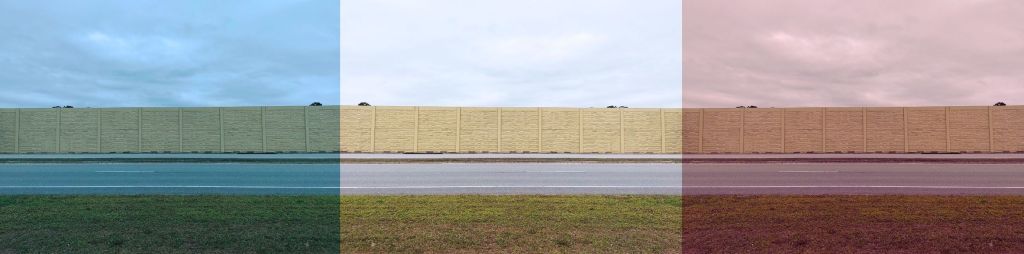
I first noticed it while biking to the park—a tall, clean, almost sterile wall whose purpose wasn’t immediately clear to me. After checking the map, I realized it was there to shield the residential area from the freeway, offering a blank white wall instead of a view of cars and trucks speeding by at 70 miles per hour. Just that.
Still, walls always make you think about what lies on the other side. While this particular wall doesn’t carry such weight, walls in general suggest the existence of an “us” and a “them,” of “here” and “there,” of those who “come” and those who “go”. Walls mark the boundaries of language and the impossibility of understanding. Walls not only divide but imply, presuppose, predispose.
A wall always signals an end or a beginning, depending on your perspective and where you’re coming from. A wall obscures what’s on the other side, turning us into strangers and encouraging the creation of imaginary monsters.
The “other side” is always “this side” to someone. A wall is a mausoleum burying the shared space where “we” and “they” might coexist.
But this wall? It’s just a simple wall, another excuse to think for a moment before continuing down the road.
Jesús Miguel Soto
 the present tense
Leave a comment